

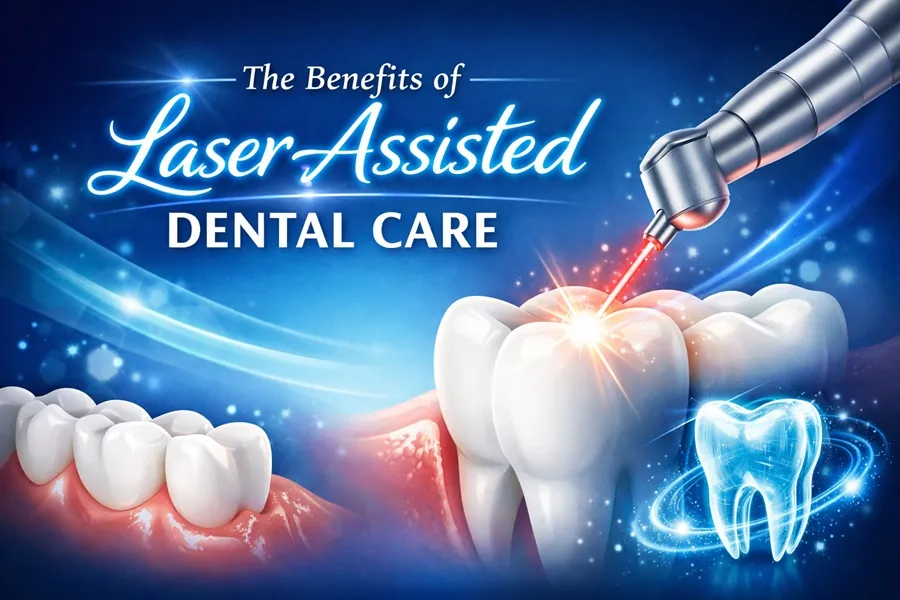
Advances in dental technology have significantly improved the way many dental procedures are performed. One of the most notable innovations is laser-assisted dental care. Dental lasers allow dentists to perform a variety of treatments with greater precision, reduced discomfort, and faster healing compared to many traditional techniques.
What Is Laser Dentistry?
Laser dentistry involves the use of specialised devices that produce concentrated beams of light energy. This light interacts with dental tissues in a controlled way, allowing dentists to remove, reshape, or treat tissues with high precision.
Dental lasers are classified into two major types:
Soft Tissue Lasers – They are usually used to target gums and other soft tissues.
Hard Tissue Lasers – They are designed for use on teeth and bone, such as in cavity treatment or tooth preparation.
Because lasers can be calibrated to very specific wavelengths and intensities, dentists can target treatment areas while minimising impact on surrounding tissues.
Key Benefits of Laser-Assisted Dental Care
Laser-assisted treatments offer several clinical and patient-focused advantages, which is why they are becoming increasingly common in dental practices.
Greater Precision and Tissue Preservation
One of the most important advantages of laser dentistry is its high level of precision. Traditional tools may affect larger areas of tissue, while lasers allow dentists to focus only on the exact area being treated. This precision helps preserve healthy tooth and gum tissue.
Reduced Pain and Greater Comfort
Many patients experience less discomfort with laser-assisted procedures compared to traditional methods. Since lasers can perform certain tasks without the vibration, pressure, or noise associated with dental drills, the treatment experience may feel less intimidating.
Also Read: Laser Dental Treatment: The Way to the Best Dental Care
Less Bleeding During Procedures
When lasers are used on soft tissues, they simultaneously cut and cauterise the tissue. This means that small blood vessels are sealed during the procedure. This makes procedures such as gum contouring or periodontal treatments cleaner and easier for both the dentist and the patient.
Lower Risk of Infection
Dental lasers also have a sterilising effect. The high-energy light can reduce bacteria in the treatment area during the procedure. By reducing bacterial contamination, lasers may help lower the risk of post-procedure infections.
Faster Healing and Tissue Recovery
Because laser procedures tend to be minimally invasive and more precise, the surrounding tissues experience less trauma. Reduced trauma typically leads to faster healing and a smoother recovery process.
Reduced Dental Anxiety
For many people, the sound and sensation of traditional dental drills can cause significant anxiety. Laser dentistry often involves quieter equipment and less physical contact with the tooth or gums. This can create a more comfortable environment for patients, making dental visits less stressful.
Laser-assisted dental care represents a significant advancement in modern dentistry. By offering greater precision, improved patient comfort, and faster healing, laser technology is helping transform the dental treatment experience.
Frequently Asked Questions:
Is laser dental treatment painful?
+What dental problems can be treated with laser dentistry?
+Is laser dentistry safe for teeth and gums?
+Does laser dental treatment heal faster than traditional methods?
+Will there be bleeding during laser dental procedures?
+Can laser dentistry reduce dental anxiety?
+Is laser dentistry better than traditional dental treatment?
+RECENT POSTS
Snoring & Sleep Apnea: How a Custom Dental Appliance Can Help You Both Sleep
Mouth Taping for Better Sleep: Does the Viral Biohack Actually Work?
Vaping and Your Teen’s Teeth: The Hidden Oral Health Risks Every Parent Should Know
Pre-Wedding Smile Prep: A 6-Month Countdown to Your Big-Day Smile
Should You Fly Home for Dental Work? A Bay Area Guide to “Dental Tourism” Abroad
Can AI Spot Cavities Better Than Your Dentist?
Matcha, Cold Brew & Sparkling Water: Stains & Erosion
Viral TikTok Dental Hacks, Debunked
Hydroxyapatite vs. Fluoride Toothpaste: What to Know
“Ozempic Teeth”: Protecting Your Smile on GLP-1 Medications
How Long Do Dental Treatments Last? A Complete Guide to Longevity of Dental Care
7 Teeth Whitening Tips for a Brighter Smile
What to Expect During and After Laser Dental Treatment
The Benefits of Laser-Assisted Dental Care
Hard Tissue vs. Soft Tissue Laser Dentistry: Key Differences
Laser Dentistry: A Modern Approach to Dental Treatment
The Silent Link: How Gum Disease Impacts Your Heart
Smart Foods for Bright Smiles: Making Children's Dental Care Fun and Easy
Family Traits and Teeth: How Genetics Shape Your Dental Health
Robotics Redefining Dental Implants – From Planning to Placement
The Latest Treatments in Dental Care: Innovations for a Healthier Smile
One Dentist, One Family, Better Smiles – The Case for Continuity of Care
Single Tooth Implants vs. Full Arch: Techniques Compared
Smiles for All Ages: Your Guide to Family-Friendly Dental Care in San Jose
Affordable Dental Implants in San Jose: A Breakdown of Expenses
Invisalign for Adults: Is It Too Late to Straighten Your Teeth?
Post-Pandemic Stress-Related Dental Damage and Treatments
Dental Trends to Watch in 2025 - Innovations in Oral Care
New Year, New Smile: Top Dental Hygiene Resolutions for 2025
Cosmetic Dentistry Before the Holidays: Get Ready to Smile!
Preventive Dental Care: Assessing Your Dental Needs Before Year-End
How Stress Affects Oral Health: Understanding the Connection
Back-to-School Dental Checklist: A Guide for Parents and Kids
Dental Care in the Bay Area for International Travelers without Insurance
Discovering Hidden Health Risks: How Dentists Can Spot Cardiovascular Issues
The Importance of Oral Care for Mothers
Critical Evaluation of DIY Aligners: Advantages and Disadvantages
10 Dental New Year Resolutions You Should Make
The Side-Effects of Home Teeth Whitening
The Benefits of Professional Teeth Whitening
Uncovering the Brilliance of Veneers: The Profound Power of a Radiant Smile
The Surprisingly Long History of Dental Fillings
Everything You Need to Know About Dental Fillings
Pediatric Dental Problems 101 – What Parents Need to Know
Understanding Pediatric Dental Health: When Tooth Extraction May Be Necessary for Your Child
What Does Dental Surgery Mean?
How Is Dental Implant Surgery Done?
Dental Implant Surgery - What You Need to Know
What happens if you Do Not go for Dental Checkups?
Frequently Asked Questions About Invisalign
Four Tips for Choosing the Best Dental Clinic in San Jose
What Does a Cosmetic Dentist Do?
What Happens During a Dental Exam?
How to Prepare for Orthodontic Treatment
Dental Implants - What They Are and What They Do
How to Find a Good Dental Office
Dental Care and Dental Treatment for Seniors
Your Mouth, Your Smile, And Your Health
Understanding Common Dental Treatments
When Does a Dental Condition Turn into Emergency Dental Care?
What Is the Best Crown Type for the Front Teeth?
Why Don't Emergency Rooms Handle Dental Emergencies?
5 Benefits of Having a Family Dentist
5 Common Types of Dental Emergencies
Laser Dental Treatment: The Way to the Best Dental Care
5 Things Every Person with Dentures Needs To Know
What are the Most Common Dental Diseases?
5 Reasons Why Baby Teeth are Important
Dental Care During Winter - Ways to Protect your Teeth
Grinding and Clenching Teeth – The Harmful Effects
New Trends in Dentistry and What They Mean For Patients
Importance of Orthodontic Treatments
Importance Of Properly Aligned/Straight Teeth
Who's Afraid of Dental X-Rays?
Precautions to be Taken When Visiting Your Dentist
Diet, Oral Hygiene and Pregnancy - What You Need To Know
COVID 19 - What You Need To Know
Why you must say 'yes' to Fluoride
Gum Disease and Systemic Health
How Smiling And laughing Affect Your Health








At Hills Dental Group, we deliver the Best Dental Care in San Jose for patients of all ages. From preventive check-ups and cosmetic treatments to restorative solutions and emergency care, our team blends expertise with compassion to keep your smile healthy and confident. Discover why families across the Bay Area trust Hills Dental Group for comprehensive care.
Office Hours
Monday
: 9:00 AM - 5:00 PM
Tuesday
: 9:00 AM - 5:00 PM
Wednesday
: 9:00 AM - 5:00 PM
Thursday
: 9:00 AM - 5:00 PM
Friday
: Closed
Saturday
: Closed
Sunday
: Closed
Copyright © 2020-2026 Hills Dental Group. All Rights Reserved. Privacy Policies